The Art of Noticing
2-3 minutes read
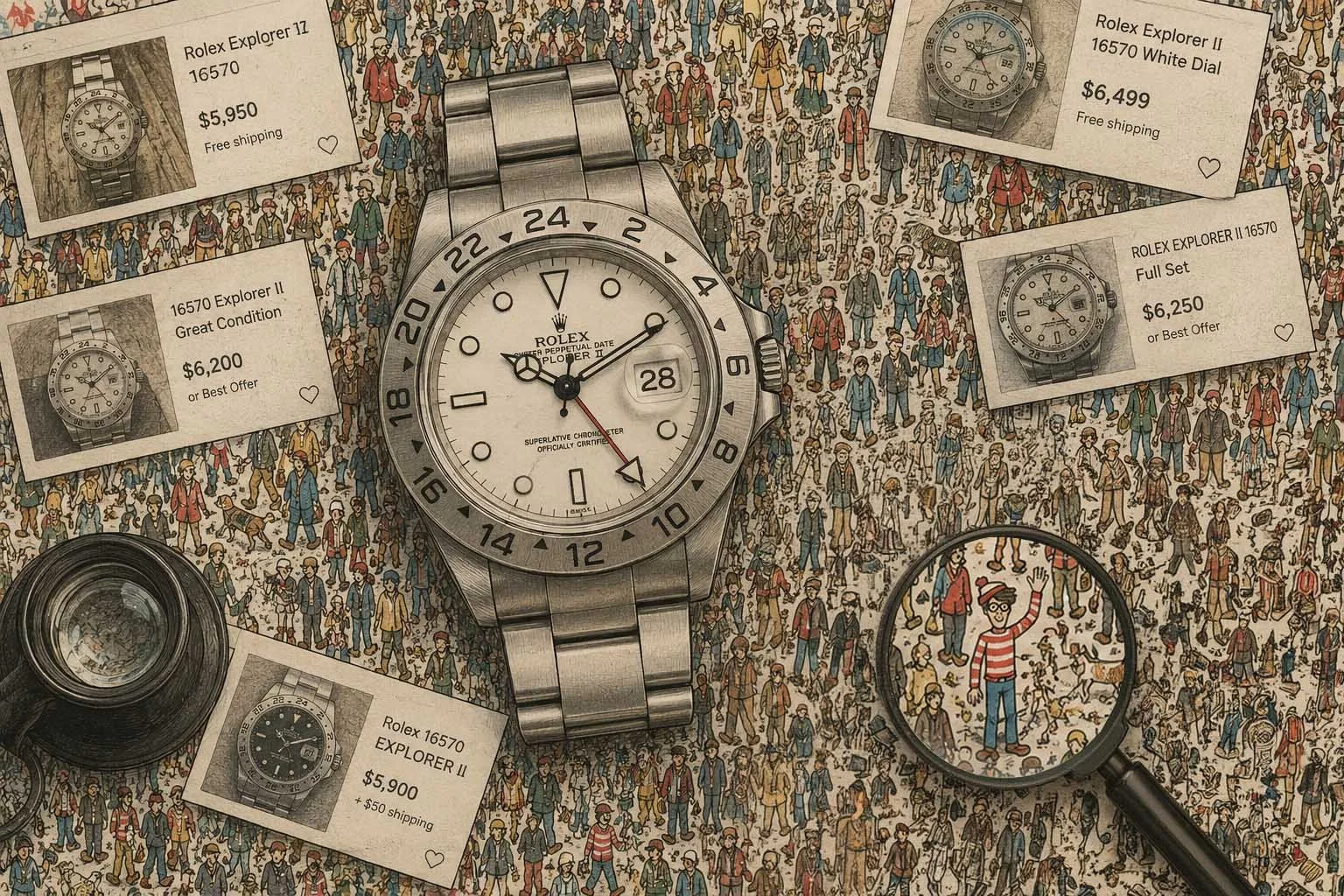
Illustrative purposes only
For a child, Where's Wally? is a lesson in patience and observation. Its pages are filled with chaotic landscapes: hundreds of figures each dressed in some variation of stripes, hats, costumes, and colours. There’s a man with a funny moustache, a flock of birds, and characters engaged in activities that seem to have nothing to do with one another. Somewhere in the middle of it all is Wally, distinguished only by a particular combination of a red-and-white striped shirt, bobble hat and glasses that millions of children learned to recognise almost instinctively. The pleasure of the book was never in simply finding Wally. It was in becoming better at finding him.
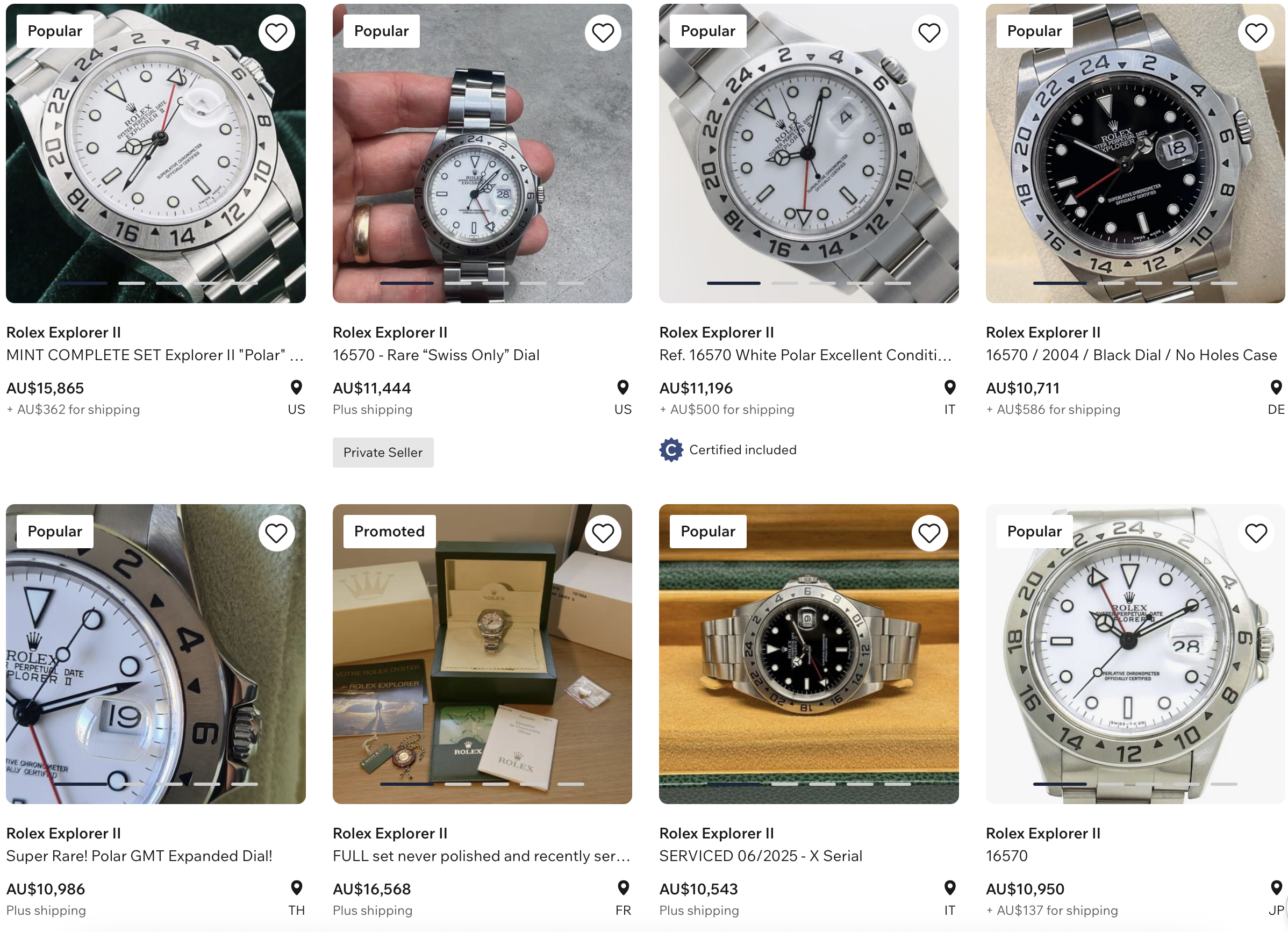
Image via Chrono24
As adults we still enjoy a version of this game. A collector searching for a particular reference may scroll through hundreds of listings looking for one tiny detail. The photographs vary wildly in quality, the descriptions are often incomplete, and the details that matter can occupy no more than a few millimetres of a photograph. To someone unfamiliar with watches it can feel like trying to find Wally without actually knowing who Wally is.
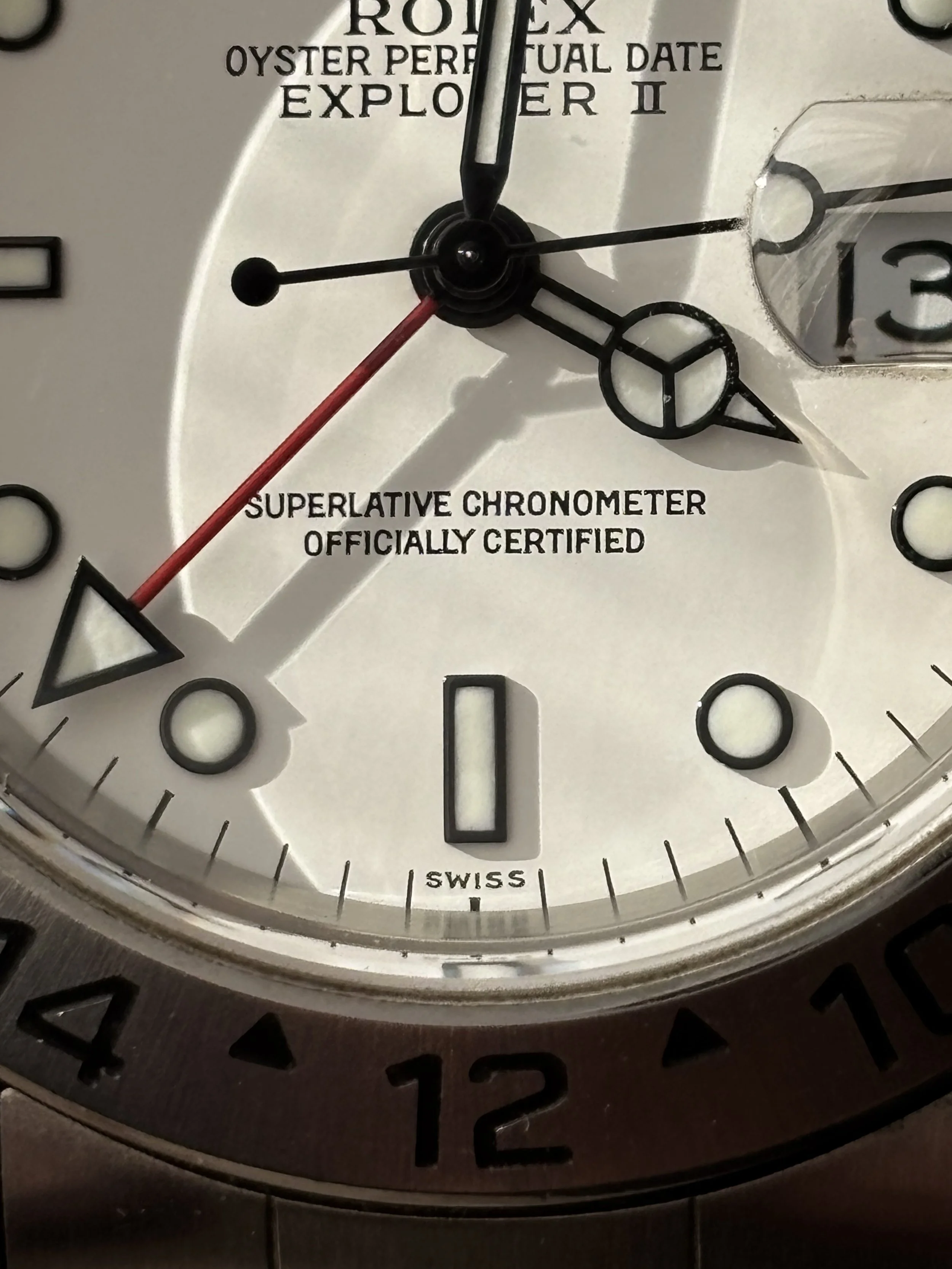
Consider the difference between a Rolex dial marked "Swiss" and one marked "Swiss Made" To most people the distinction is insignificant. To a collector the words printed at six o’clock tell a story. A Swiss Only dial can be a clue that places a Rolex in the brief period around the transition from tritium to Luminova. While not necessarily definitive, it's the kind of detail that can make an otherwise ordinary listing worth a closer look.
But like Where's Wally?, the reward isn't necessarily the knowledge itself. It is the moment when that knowledge becomes useful. A watch enthusiast might spend weeks learning about a particular dial variation without ever expecting to encounter one in the wild. I was able to put this knowledge to use when I visited the family home of my then-girlfriend, now wife. After dinner, I noticed a collection of watches scattered across a shelf. Among them was a 16570 Explorer II, and something about the dial caught my eye. I immediately launched into an explanation of why the short line of text suggested the watch was likely from around 1999.
Photograph straight off the wrist…
For a brief moment, I was Dustin Hoffman in Rain Man, if Dustin Hoffman had spent his time memorising Rolex dial variations instead of counting cards. My future father-in-law promptly confirmed that he had indeed purchased it in July of 1999 and had the papers to prove it. The moment was brief, but strangely satisfying. All those hours spent reading about obscure dial variations had suddenly become useful. What had previously existed only as something read or memorised had become something I could recognise in the real world.
This is perhaps why the hunt can remain enjoyable even after the need for another watch has disappeared. The object is only one part of the experience. There is also the process of learning what exists, understanding why it matters, and eventually developing the ability to recognise it without having to consciously search for it.
This is also what makes the question of collectibility somewhat beside the point. Sooner or later, almost every discussion of a vintage watch arrives at the same question: will it become valuable? Perhaps. Some obscure references and variations eventually become highly sought after, while others remain obscure for decades. Predicting which is which is difficult, and if the sole objective is financial return the S&P 500 is probably a more sensible proposition than a vintage watch bought from a poorly photographed listing.
Financial return is only one possible reason to collect, and arguably not the most interesting one. There is a particular kind of satisfaction in knowing something simply because it interests you, and an even greater satisfaction in discovering that knowledge has given you an advantage in the real world. The value of the search is not necessarily that it leads to an appreciating asset. It is that for a brief moment you saw something that would otherwise have remained invisible.
When I first spotted it on that shelf it was simply a watch I recognised. The dial gave my future father-in-law and me something to talk about when we were still getting to know each other. Years later, after his daughter became my wife, I wore that same watch on our wedding day. I suppose that’s another part of the fun of collecting. We go looking for details because we think we know why they matter. Sometimes, years later, they matter for reasons we couldn’t have known at the time.
Hi Jamie
Thanks again for sending me your email and encouraging me to get in touch, and thank you for making it all the way through the piece. I hope this gives you a better sense of how I like to approach watches, writing and photography.
I've really enjoyed putting this together and would love to hear what you think. If you think it has potential for publication, or if there's another story you'd like me to shoot or write, I'd be very happy to take it on. For now, I've used illustrations and a quick wrist shot, as I've promised my wife I wouldn't work on our honeymoon.
Lastly, my apologies for the delay in getting back to you. I've been traveling to Sydney for my own wedding. I'll now be playing tourist in my own home city before heading back to Osaka. Even if there's nothing I can do for HODINKEE Australia at the moment, I'd still love to hear any recommendations you have for places to eat in Sydney.
Cheers,
River